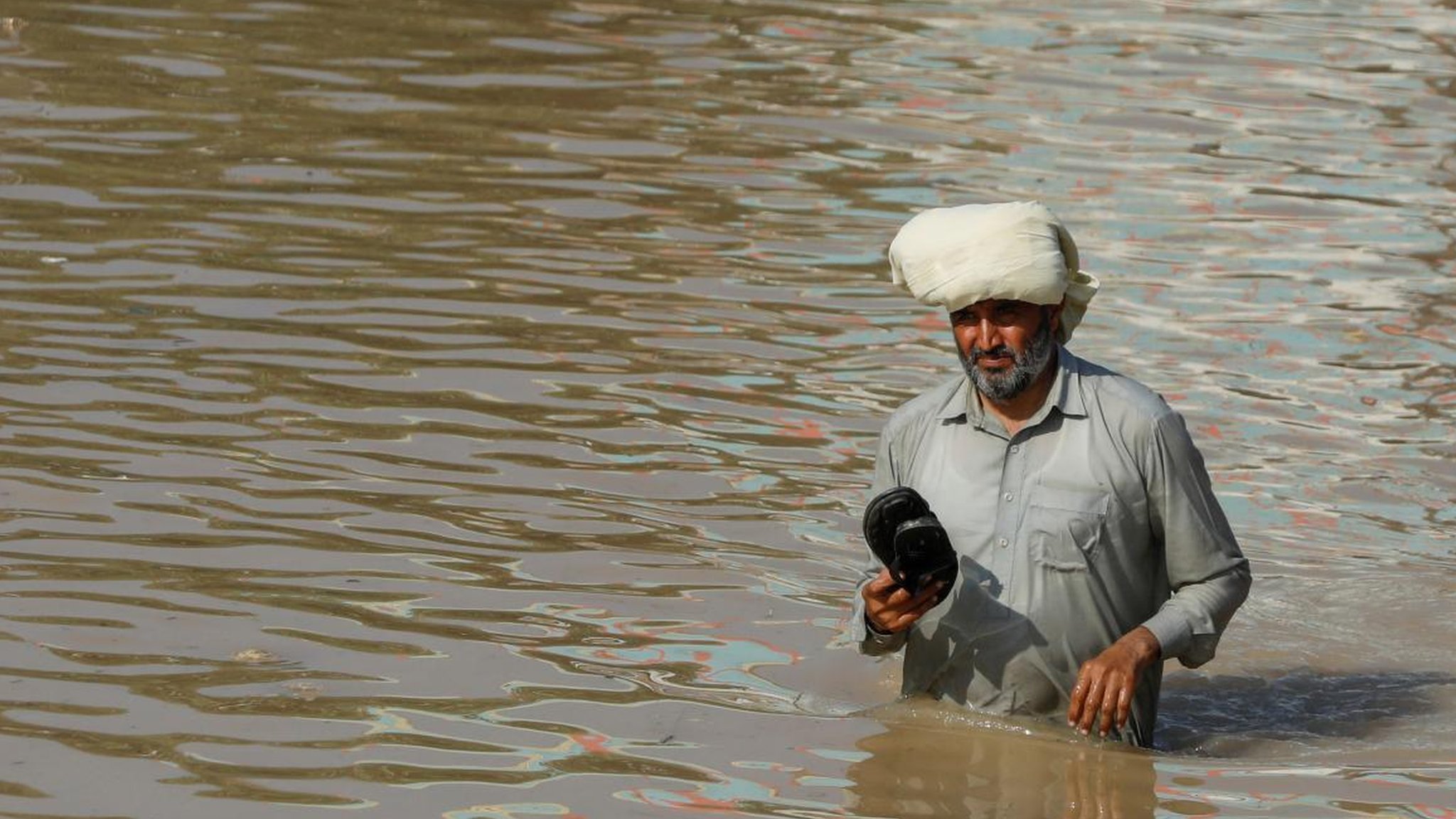
Heavy rainfall has caused severe devastation in northern Pakistan, leading to disastrous flooding resulting in numerous deaths and making countless families homeless. Entire communities have been washed away, and many survivors are now in desperate need of food, shelter, and potable water. For days, persistent rainstorms have pounded the area, overflowing rivers and reservoirs, and inundating towns that once supported the livelihoods of thousands. The massive force of the water has resulted in extensive damage, which local authorities consider one of the most severe natural calamities the nation has faced in recent years.
Emergency teams have been sent to the hardest-hit regions, although the extent of the destruction has made handling emergency situations extremely challenging. Routes and bridges have been swept away, isolating communities from external support. In some mountainous areas, helicopters are the sole method to bring relief, but harsh weather conditions have impeded even those activities. Locals have depicted scenes of despair, with individuals holding onto rooftops and trees as the water levels climbed rapidly.
Pakistan’s authorities have announced an emergency situation, calling for help from global partners to provide humanitarian aid. Temporary accommodations are being established, yet these shelters are quickly filling up as more displaced families keep coming. The situation in these camps stays unstable, with not enough medical services and poor sanitation systems increasing worries about potential disease outbreaks. Medical professionals are especially worried about waterborne diseases like cholera and dysentery, which tend to spread swiftly following significant floods.
The floods have caused significant devastation to human life and caused massive economic losses. Agricultural lands have been inundated, wiping out crops that numerous families rely on for their survival. A large number of livestock have perished, depriving rural areas of essential resources for both income and sustenance. Initial evaluations point to damages totaling billions of dollars, a harsh setback for a country frequently grappling with economic difficulties. The farming industry, which provides jobs to a large segment of Pakistan’s citizens, might require several years to completely rebuild.
Climate experts have pointed to the disaster as another stark reminder of the growing threat posed by climate change. Pakistan, despite contributing relatively little to global carbon emissions, has become one of the most vulnerable countries to the effects of global warming. Rising temperatures have altered rainfall patterns, intensified monsoon seasons, and accelerated the melting of glaciers in the northern mountain ranges. These factors have combined to increase the likelihood of extreme flooding events, placing communities in low-lying areas at perpetual risk.
For survivors, the emotional toll is as overwhelming as the physical destruction. Families who have lost loved ones are mourning amid the chaos, while others search desperately for relatives who remain unaccounted for. Many children have been separated from their parents in the rush to escape rising waters, and aid organizations are now working to reunite them. Stories of survival continue to emerge, from villagers who swam to safety after their homes collapsed to rescuers who braved strong currents to save trapped families.
International humanitarian organizations have taken action to offer assistance, delivering food provisions, safe water, shelters, and medical gear. Nations throughout Asia, the Middle East, and Europe have promised financial support and resources. Nonetheless, aid professionals emphasize that solely providing aid is insufficient; substantial investment is necessary for long-term recovery to reconstruct infrastructure and establish systems resilient to climate challenges. Experts caution that without these actions, Pakistan may continue to struggle in a repeated cycle of disaster and recovery, where each flood reverses years of development.
The floods have also reignited discussions within Pakistan about the country’s disaster preparedness. Critics argue that insufficient investment in flood defenses, inadequate early warning systems, and poor urban planning have all contributed to the scale of the tragedy. Many floodplains have been developed into residential and commercial zones despite repeated warnings, leaving millions vulnerable whenever heavy rains strike. Calls are growing for more comprehensive planning, better drainage infrastructure, and policies to protect high-risk areas from unregulated development.
Simultaneously, political frictions hinder the government’s capacity to react efficiently. As economic hurdles continue to stretch national resources, officials are confronted with the formidable challenge of managing immediate aid alongside future rebuilding efforts. Critics from opposition parties have accused the government of delayed reactions, whereas authorities maintain that the unmatched scale of the flooding has overpowered even the best-prepared infrastructures. This strain highlights the extensive difficulties Pakistan encounters in dealing with natural disasters amid political and economic uncertainties.
Local communities are displaying an incredible ability to recover. Volunteers have engaged in rescue efforts, often putting their own security at risk to assist neighbors caught in the floodwaters. Faith-based and community groups are offering shelter and handing out food to those who require it. These local initiatives underscore the unity and determination of Pakistan’s people, even when facing significant challenges.
Examining the future, the path to recovery is anticipated to be lengthy and challenging. Whole communities must be reconstructed, agricultural areas restored, and infrastructure built anew. The undertaking is substantial, yet specialists highlight that it also provides a chance to reconstruct in a manner that is both safer and more sustainable. By allocating resources to climate adaptation actions, enhancing disaster readiness, and updating infrastructure, Pakistan can work towards decreasing its susceptibility to forthcoming catastrophes.
The flood crisis has highlighted that climate change is a pressing issue with severe impacts, not a distant concern. Although there has been global solidarity towards Pakistan, doubts persist regarding the actual assistance that will be provided. People in the country hope that this disaster will spur enhanced international efforts on climate resilience, benefiting both Pakistan and other nations encountering comparable threats.
As the waters slowly recede, the true extent of the disaster is only beginning to emerge. Officials warn that the death toll is likely to rise as rescue teams reach previously inaccessible areas. The emotional scars, however, may endure far longer than the physical damage. For countless families, life has been permanently altered, and the road to recovery will be filled with challenges. Yet amid the despair, there is determination to rebuild, and the resilience of Pakistan’s people remains a source of strength in this time of crisis.