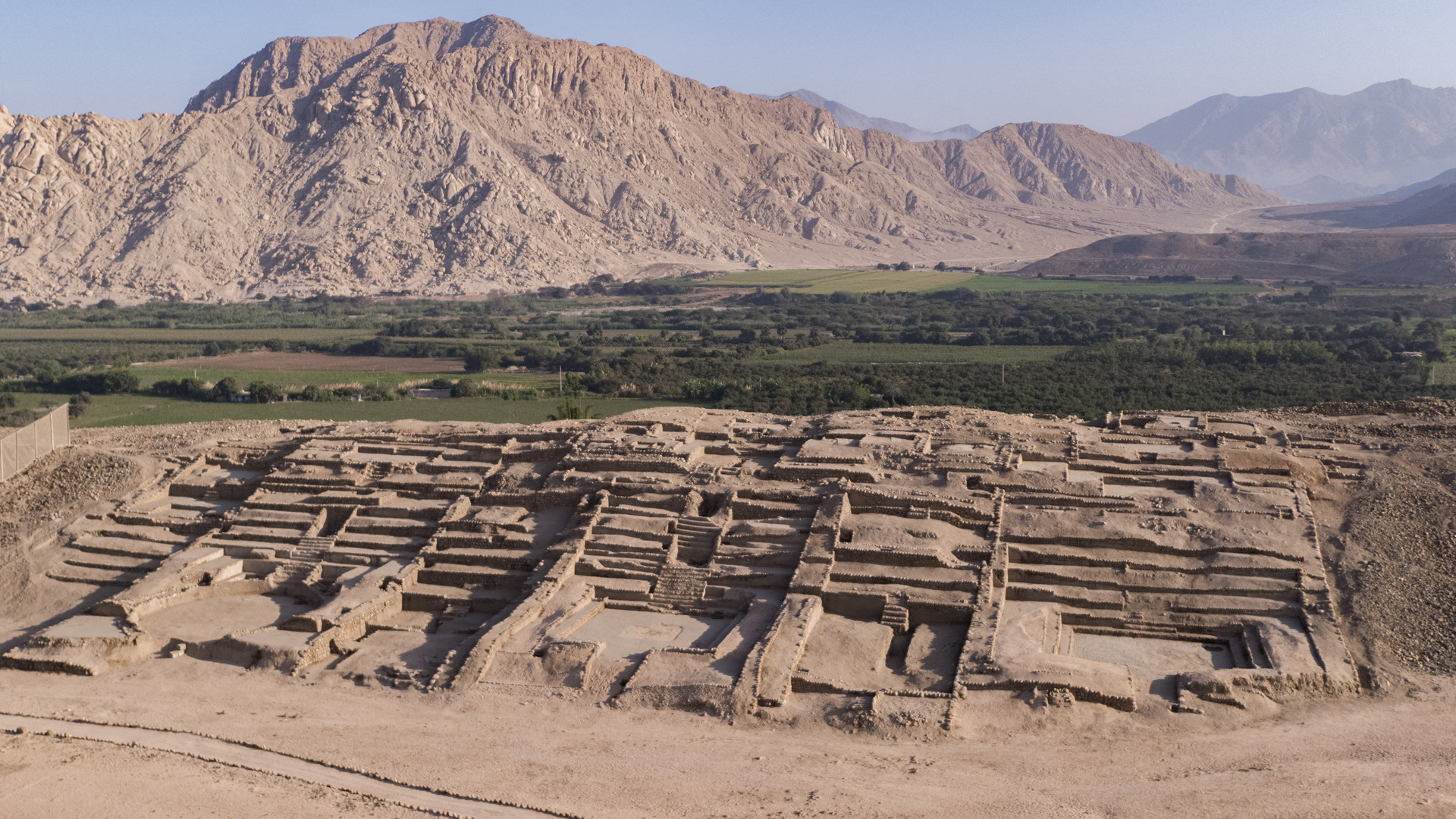
A team of archaeologists in Peru has brought to light the remains of a 3,500-year-old city, offering new insights into the region’s pre-Columbian history and shedding light on early urban development in the Americas. This extraordinary discovery, located in the coastal desert region of northern Peru, is being hailed as one of the most significant archaeological finds in recent decades.
The ancient settlement, uncovered after years of careful excavation, provides valuable evidence of complex social organization, architectural innovation, and ceremonial practices that date back to a period well before the rise of more widely known Andean civilizations such as the Moche or Inca. The site is believed to belong to the ancient Casma–Sechin culture, one of the earliest societies in South America known for its monumental architecture and sophisticated ceremonial centers.
Archaeologists leading the project describe the discovery as a window into the early formation of urban centers in the Americas, comparable in significance to ancient settlements in Mesopotamia, Egypt, or the Indus Valley. The newly unearthed city reveals the intricate planning and societal structure of a people whose history has long remained hidden beneath layers of sand and time.
The city’s most striking features include massive stone walls, ceremonial plazas, stepped platforms, and residential compounds, all constructed using locally sourced materials. The layout suggests that the settlement was not only a political and economic hub but also a center for religious and cultural activities. The architecture displays a level of planning and coordination that points to the existence of a centralized authority and an organized labor force.
What makes this discovery particularly significant is the evidence of early urban planning. The presence of wide avenues, drainage systems, and carefully positioned buildings indicates that the inhabitants had developed sophisticated methods for managing both the natural environment and the social dynamics of city life. Such complexity challenges earlier assumptions that large-scale urbanization in the Americas occurred only with later civilizations.
The location also encompasses many ceremonial edifices embellished with elaborate engravings, featuring illustrations of gods, animals, and geometric motifs. These artistic features imply that spirituality was a key aspect of the society, potentially acting as the philosophical bond uniting the populace. Researchers have additionally discovered an assortment of ritual offerings, such as ceramics, lithic implements, and food remnants, which offer further insights into the everyday life and sacred practices of the city’s inhabitants.
Radiocarbon tests on artifacts from the location have verified that the community dates back about 3,500 years, situating it in the Late Preceramic or Initial Period of Andean history. This period is marked by the rise of stationary farming communities that started to construct monumental buildings and intricate social systems. The dimensions and structure of the city imply it housed a population of thousands, making it one of the first known instances of extensive urban habitation in the Americas.
The discovery is not only significant for its age and scale but also for the insight it provides into the development of early civilizations in a region that is often overshadowed by the more famous cultures of the high Andes. The Casma–Sechin culture, which flourished along Peru’s northern coast, is less well known internationally but has long been recognized by archaeologists for its monumental stone constructions and enigmatic iconography.
The site is located in a region that has been subject to extensive archaeological research over the years, but the sheer scale and preservation of this newly uncovered city set it apart. Many of the structures remain remarkably intact, protected for millennia beneath layers of desert sand. This preservation has allowed researchers to study the original layout and architectural features in exceptional detail.
Archaeologists are particularly excited about the potential to learn more about the daily lives of the city’s inhabitants. Preliminary excavations have revealed domestic spaces, storage areas, and evidence of food production, including remains of cultivated plants such as maize, beans, and squash. Animal bones suggest the consumption of both domesticated animals and marine resources, indicating a diverse and adaptable diet.
The finding has also sparked fresh inquiries regarding the connection between various early societies along the Peruvian coastline. Scientists are currently investigating how this historic city might have connected with other nearby communities, either through commerce, conflict, or the exchange of cultural practices. The location could provide significant insights into the dynamics that prompted the rise of intricate societies in ancient South America.
Local authorities and heritage organizations are working alongside archaeologists to ensure that the site is preserved and protected. Given the site’s potential for tourism and education, discussions are already underway about how to balance public access with conservation. The Peruvian government has expressed strong support for the ongoing research, recognizing the find as part of the country’s rich cultural heritage.
The group directing the excavation comprises specialists from universities in Peru alongside international partners with expertise in archaeology, anthropology, and conservation science. Their multidisciplinary strategy integrates conventional digging methods with advanced technologies like 3D scanning, drone mapping, and geophysical assessments. These instruments assist researchers in constructing comprehensive representations of the site while reducing disruption to delicate structures.
As excavation work continues, the team hopes to uncover more information about the social and political organization of the ancient city. Early findings suggest that the society may have been stratified, with elites occupying larger, more elaborate residences close to ceremonial centers, while common people lived in more modest dwellings on the periphery. Evidence of specialized craft production, including pottery and textile-making, hints at a diversified economy that supported artisans as well as farmers.
The spiritual practices in the city attract significant attention. It is thought that the ceremonial squares and large platforms were used for public ceremonies, celebrations, and perhaps observing stars. Certain buildings seem to be oriented towards celestial occurrences, emphasizing the significance of seasonal rhythms in the farming calendar and the community’s religious customs.
One of the key challenges facing archaeologists is interpreting the symbolic meanings of the site’s carvings and artistic motifs. The iconography includes both human and animal figures, some of which may represent mythological beings or ancestors. Understanding these symbols could provide valuable insight into the belief systems and worldview of this ancient culture.
Este hallazgo ha sido comparado con otros centros urbanos antiguos en Perú, como Caral, otro sitio monumental precolombino situado más al sur. Aunque cada asentamiento tiene características particulares, en conjunto muestran que sociedades complejas prosperaban en las Américas mucho antes del surgimiento del Imperio Inca. Estos descubrimientos están llevando a los estudiosos a reconsiderar las cronologías y trayectorias de las civilizaciones tempranas en la región.
The global archaeological community has embraced the finding, highlighting its contribution to the increasing evidence that the Americas hosted some of the planet’s earliest and most inventive urban civilizations. The revelation of the 3,500-year-old city acts as a strong reminder that human creativity and social structuring have deep origins worldwide.
With fresh levels of excavation revealing more about this ancient city, archaeologists aim to solve long-standing mysteries concerning the organization of early societies in South America, their adaptations to difficult environments, and how they established the groundwork for later civilizations. Every artifact, structure, and symbol discovered provides researchers with valuable insights into the complex mosaic of human history that took place on the Peruvian coast thousands of years in the past.
The project is still ongoing, and scientists predict that additional digs could continue for several years, perhaps even decades. However, the preliminary results already provide an extraordinary view into a bygone era, reminding us that history still contains myriad tales to be uncovered beneath the ground.