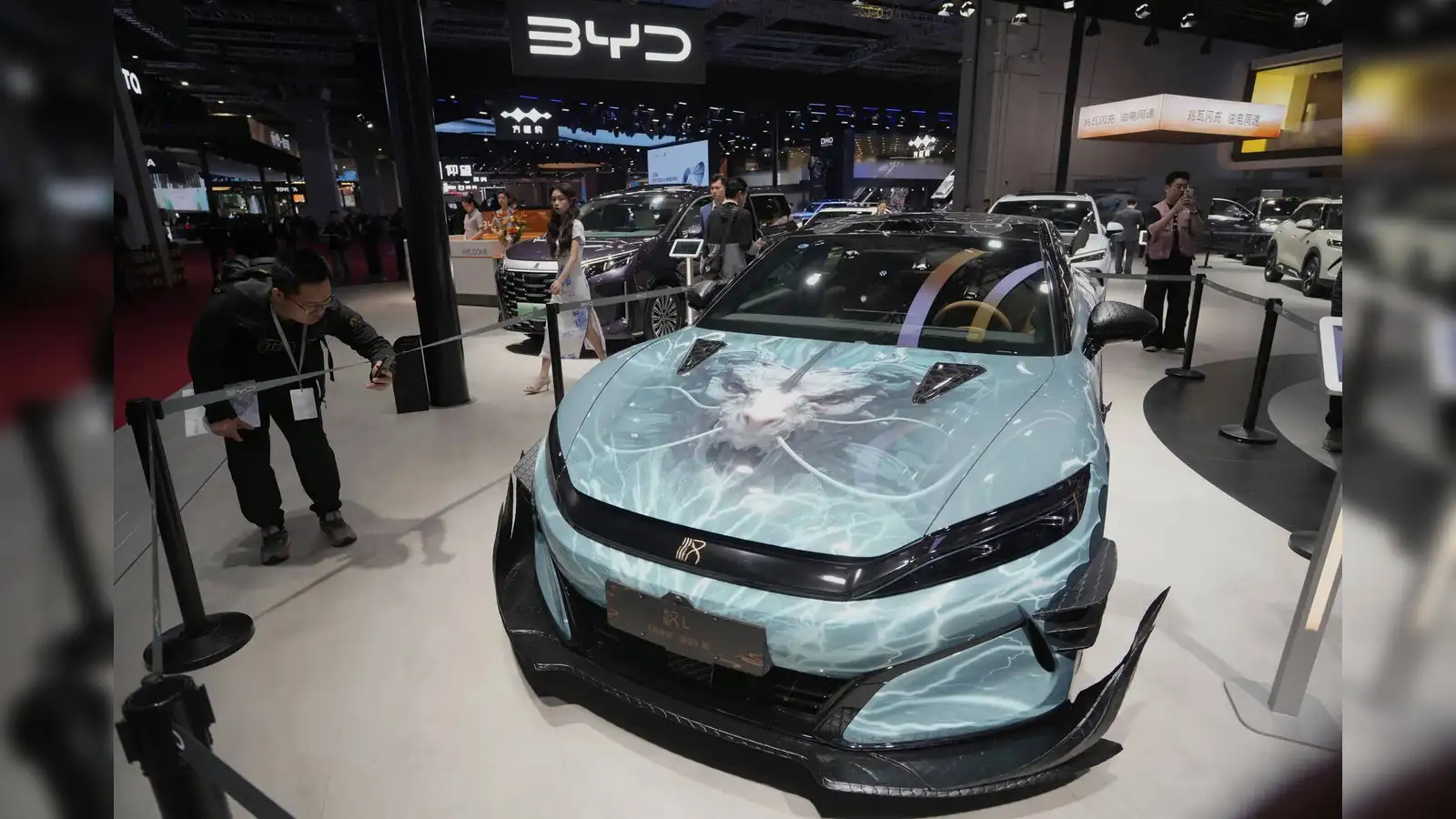
Manufacturers of Chinese electric vehicles are quickly expanding into global markets, but intense rivalry domestically endangers the existence of certain brands.
In recent years, China has emerged as a powerhouse in the electric vehicle (EV) sector. The nation’s manufacturers have leveraged advanced technology, robust supply chains, and government incentives to dominate domestic sales while eyeing global expansion. Leading companies are now exporting their vehicles to Europe, North America, and Southeast Asia, signaling the rise of Chinese EVs as serious competitors in the international automotive market. However, the aggressive price wars unfolding in China’s domestic market pose a significant challenge, raising questions about the long-term sustainability of many brands.
World expansion and global aspirations
Chinese EV companies are no longer content with capturing domestic market share. Firms such as BYD, NIO, XPeng, and Li Auto have begun forging paths into foreign markets, positioning themselves as affordable alternatives to established Western automakers. By offering high-spec vehicles at lower price points, these brands aim to attract cost-conscious consumers while demonstrating that Chinese EVs can compete in quality, safety, and innovation.
In Europe, Chinese electric vehicles are now visible in prominent cities, capturing the interest of customers attracted by incentives for electric mobility and a commitment to eco-friendly living. Simultaneously, in Southeast Asia and Latin America, manufacturers are entering developing markets where there is an increasing need for cost-effective, energy-saving cars. This worldwide growth demonstrates both strategic planning and belief in their technological advancements, from battery efficiency to intelligent vehicle systems.
The push abroad also serves to diversify revenue streams. With domestic competition intensifying, expanding internationally allows manufacturers to offset some of the margin pressures they face at home. By entering markets where electric vehicles are still in early stages of adoption, Chinese brands can build recognition and loyalty before global competition becomes even fiercer.
Conflicts over domestic pricing and unification of the market
Although expansion abroad seems encouraging, the domestic landscape poses a tougher test. The Chinese electric vehicle sector is marked by fierce rivalry, with numerous brands providing comparable models at progressively lower prices. This situation has led to a “race to the bottom” condition, where maintaining profit margins is continually challenging, and smaller or newer brands face the threat of being completely pushed out.
China has historically used government subsidies to boost the adoption of electric vehicles. However, modifications in policy and a gradual decrease in incentives have heightened competition on pricing. Numerous manufacturers are now depending on large-scale sales to stay profitable. Nonetheless, the market is becoming saturated in certain metropolitan areas. Companies unable to achieve scale or set their products apart are experiencing financial pressure, resulting in closures, mergers, or takeovers.
The outcome is likely to be a wave of consolidation, with stronger brands absorbing weaker rivals or some exiting the market entirely. While this may reduce domestic choice for consumers, it could ultimately strengthen the most competitive players, who can then leverage their position for international expansion.
Technological innovation as a survival strategy
In a market characterized by intense price competition, advances in technology have emerged as a significant factor that sets companies apart. Businesses that focus on developing battery technology, self-driving systems, and intelligent connectivity capabilities are more likely to withstand local and international competitive forces. Buyers are now looking at factors beyond just cost when selecting an electric vehicle, such as range, safety, software compatibility, and design, indicating that brands cannot depend solely on reduced prices to retain their share of the market.
Battery efficiency, in particular, is a key battleground. Chinese manufacturers have made significant strides in developing high-capacity batteries with longer lifespans, faster charging, and improved safety features. By coupling these advances with competitive pricing, companies can create compelling value propositions that appeal to both domestic and international buyers.
Furthermore, intelligent vehicle technology—such as AI-powered driving, digital dashboards, and connectivity services—is increasingly a core selling feature. Companies that provide a smooth blend of hardware and software tend to retain customer allegiance and resist market competition. Thus, innovation in technology serves a dual role: safeguarding profits locally while expanding into international markets.
Reflections on geopolitics and commerce
The global expansion of Chinese EVs is not without challenges. Geopolitical tensions, trade restrictions, and regulatory differences can complicate market entry, requiring companies to navigate complex legal frameworks and import standards. For instance, entering the European Union or U.S. markets involves compliance with stringent safety and environmental regulations, intellectual property protections, and localized customer expectations.
Trade disputes could also impact pricing strategies and profitability. Tariffs or other trade barriers may reduce the cost advantage that Chinese EVs enjoy over local competitors. In response, some manufacturers are exploring localized production or joint ventures to mitigate these risks, further demonstrating the adaptability of China’s EV industry.
Despite these challenges, the global appetite for electric mobility provides significant opportunities. With climate policies promoting the transition to cleaner energy and consumer interest in sustainable transportation growing, Chinese EV brands are well-positioned to gain market share abroad—provided they can maintain financial and technological competitiveness at home.
Redefining electric vehicles
The journey of electric vehicles from China highlights both opportunities and challenges. On the one hand, their growth across borders showcases how Chinese car manufacturers can transform the worldwide automotive sector by delivering cost-effective and tech-savvy cars to different regions. On the other hand, the competition over pricing within China emphasizes that achieving success internationally requires both persistence and financial viability locally.
Companies that can combine innovation, operational efficiency, and strategic pricing are likely to thrive, while weaker competitors may disappear from the market. This natural selection process could ultimately strengthen the sector, allowing Chinese brands to compete on quality and reliability rather than merely cost.
As the global EV market continues to grow, the interplay between domestic pressures and international ambitions will shape the future of Chinese electric vehicles. For investors, consumers, and policymakers, understanding this dynamic is essential for anticipating both opportunities and risks in one of the most rapidly evolving industries in the world.
The growth of Chinese electric vehicles signifies a more extensive transformation in worldwide automotive influence. Although the path forward is filled with obstacles—ranging from competitive pricing to international trade disagreements—the industry’s capacity for innovation and adaptation implies that Chinese companies are not merely involved in the electric transition—they are playing a pivotal role in shaping it.