

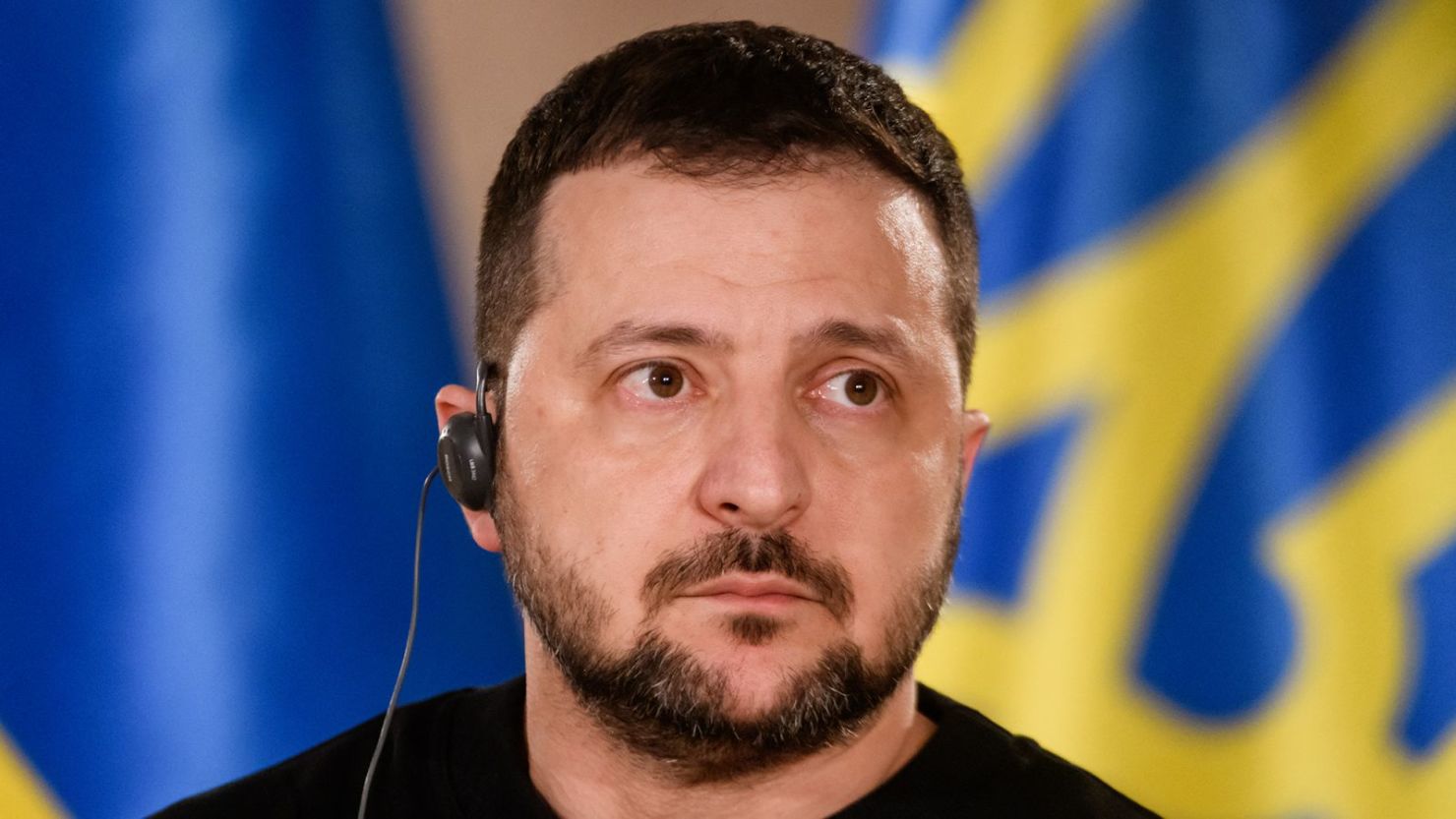
Ukraine and US Fail to Finalize Rare Earth Minerals Agreement
This past Friday, Ukrainian President Volodymyr Zelensky and US President Donald Trump convened in Washington with the intention of signing a deal that would allow the US to tap into Ukraine’s rare earth mineral resources. Nevertheless, the session deviated from its intended purpose and concluded with a tense discussion involving Zelensky, Trump, and Vice President JD Vance. After Zelensky’s premature exit, the White House issued a statement confirming that the agreement remained unsigned.
Previously, Zelensky had expressed optimism that this «preliminary» agreement could pave the way for further cooperation. However, he confirmed that Ukraine had yet to secure any security guarantees from the US—one of his key demands. Trump, for his part, argued that such a deal would allow American taxpayers to «recoup their money» from aid provided to Ukraine during the war, but insisted that Europe should take primary responsibility for Kyiv’s security.
What Are the Terms of the Agreement?
On Wednesday, Prime Minister Denys Shmyhal of Ukraine declared that Kyiv and Washington had completed a draft version of the agreement, which was made public on Friday morning. The arrangement proposed the establishment of an «investment fund» aimed at aiding Ukraine’s rebuilding initiatives.
Shmyhal mentioned that the fund would be overseen «equally» by both countries. According to the agreement, Ukraine would contribute 50% of its prospective earnings from publicly owned mineral resources, oil, and gas to the fund. The generated funds would be directed towards projects designed to bolster Ukraine’s security, stability, and economic development.
The US, in turn, pledged a long-term financial commitment to fostering a stable and prosperous Ukraine, subject to US law. The agreement also stipulated that the US would own the maximum share of the fund permitted under American regulations.
Disagreements Over Mineral Rights and Financial Terms
It seems that the discord between Trump and Zelensky intensified due to particular aspects of the minerals agreement. Initially, the US proposed a $500 billion stake in Ukraine’s mineral assets, which Zelensky declined. Sources suggest that this demand was subsequently revoked.
Tymofiy Mylovanov, who previously served as a Ukrainian minister and now leads the Kyiv School of Economics, stated that Washington’s original proposal threatened Ukraine’s sovereignty and risked economic downfall. However, he observed that the US has adjusted its stance, presenting a fairer agreement centered on joint ownership, without making claims on past assistance. He believes this revised approach could eventually advantage Ukraine.
Trump has highlighted the financial perspective, claiming on Tuesday that the US has given Ukraine roughly $300 billion to $350 billion in aid and that a minerals agreement could help recoup this expenditure. Conversely, the Kiel Institute, a German research organization, estimates that the real US support totals $119 billion.
Are Security Assurances Part of the Agreement?
An important issue for Zelensky has been the insertion of clear security assurances from the US. On Wednesday, he confirmed that these guarantees had not been obtained.
«Including a provision on security guarantees for Ukraine was essential,» Zelensky commented.
When questioned about possibly abandoning the agreement without security assurances, he replied: «I aim for a NATO pathway or something comparable. Without security guarantees, there will be no ceasefire, and nothing will operate.»
Although there are no explicit security commitments, the agreement contains language expressing US support for Ukraine’s efforts to obtain security guarantees to secure enduring peace.
Zelensky insisted that Ukraine would not complete the agreement until he and Trump arrived at a consensus regarding security assurances and figured out how to incorporate them into the initial deal. On the other hand, Trump minimized the notion of direct US security guarantees, asserting that Europe should now assume those duties. He further mentioned that having American workers in Ukraine would provide «automatic security.»
Zelensky initially proposed the idea of a minerals agreement as a way to give the US a concrete reason to keep backing Ukraine. Trump has implied that, in return for access to minerals, Ukraine would obtain the «right to continue fighting,» with the US continuing to provide military gear and ammunition «until an agreement with Russia is achieved.»
The US president has also claimed that Russia is open to allowing European peacekeepers in Ukraine. However, Russian Foreign Minister Sergei Lavrov has dismissed this possibility.
When Will the Agreement Be Signed?
Trump initially mentioned that the agreement would be finalized at the White House meeting on Friday. Although Ukrainian Prime Minister Shmyhal affirmed that a definitive version of the deal was ready, Zelensky’s adviser, Mykhaylo Podolyak, explained that only a framework agreement was intended for signing.
Ultimately, no agreement was signed. Instead, the gathering turned into a clash between Trump and Zelensky in the Oval Office. During the heated exchange, Trump accused Zelensky of not showing enough gratitude for US support and cautioned him against «risking World War Three.»
«You need to finalize a deal, or we’re done,» Trump allegedly told Zelensky. «You lack leverage.»
Zelensky countered by asserting that there could be «no compromises» with Russian President Vladimir Putin.
Trump later took to Truth Social, alleging that Zelensky had «disrespected the US in its esteemed Oval Office» and remarked: «He can return when he is prepared for peace.»
At this point, it remains unclear whether or when the agreement will be signed.
Ukraine’s Mineral Wealth
Kyiv estimates that Ukraine possesses about 5% of the world’s «essential raw materials.» This encompasses roughly 19 million metric tons of verified graphite deposits, ranking Ukraine among the top five suppliers globally of this mineral, which is vital for manufacturing electric vehicle batteries.
Moreover, Ukraine boasts substantial quantities of titanium and lithium. The nation also asserts it has considerable reserves of rare earth elements—17 minerals crucial for military applications, wind turbines, and electronic gadgets—although some experts question the precise extent of these reserves.
Further complicating the situation, some of the mineral-abundant regions in Ukraine are currently under Russian control. Economy Minister Yulia Svyrydenko states that mineral deposits valued at approximately $350 billion are situated in areas occupied by Russia.
An additional challenge to extracting minerals is the extensive presence of unexploded landmines. Experts estimate that about 25% of Ukraine’s territory is affected, especially in the war-ravaged eastern areas.
Time is another concern. Even if the agreement is completed, it might be years before the extraction and export of these resources produce measurable economic gains.
«These resources aren’t stored in a warehouse ready for delivery—they require development,» Mylovanov commented. «US investment could eventually be advantageous for all involved.»
What is Russia’s Response?
Russian President Vladimir Putin has yet to comment on the reported details of the US-Ukraine deal. However, on Monday, he told Russian state television that Moscow is prepared to «offer» mineral resources to American companies for joint ventures, including mining in Russia’s «new territories»—a reference to occupied areas of eastern Ukraine.
Putin downplayed the potential US-Ukraine agreement, asserting that Russia «indisputably possesses, I want to stress, far more of these resources than Ukraine.»
«Regarding the new territories, we are open to involving foreign partners in developing these areas, which have rejoined the Russian Federation,» he stated.
Meanwhile, Kremlin spokesman Dmitry Peskov suggested on Tuesday that the situation remains fluid: «Whether [Ukraine and the US] will sign this agreement or something else, we’ll see. There have been no official statements on this matter yet.»


.jpg "Grupo Ficohsa apuesta por la equidad y la formación para el desarrollo de sus colaboradores")
.jpg "Cómo el gobierno corporativo de Grupo Ficohsa mejora la gestión de recursos y cumplimiento")